Professional Ant Control & Colony Baiting Services in Palwal
Local Ant Control Challenges Across Palwal
Palwal is characterized by a dynamic urban landscape featuring independent family residences, agricultural equipment workshops, expanding highway residential colonies, and warehousing clusters. However, the local environmental terrain - characterized by alluvial soil in the Yamuna basin fringe, rapidly urbanizing agricultural tracts, and high monsoon ground moisture - creates intense biological pressures for Ant Control. Property owners across Camp Colony, Housing Board Colony, Alawalpur Road, Delhi-Agra National Highway corridor, Prithla Industrial Area, and Old GT Road regularly face severe infestations requiring professional, scientific intervention rather than superficial retail sprays.
In Palwal, red stinging ants in open garden plots and sweet-seeking black ants infesting domestic pantries in Housing Board Colony. Because local microclimates sustain optimal temperature and moisture levels, infestations multiply rapidly if left unmanaged, quietly undermining structural safety, contaminating food, or disrupting sleep.
Structural Vulnerabilities in Palwal Properties
Modern properties in Palwal exhibit distinct architectural traits that pests readily exploit:
- Utility Conduits & Plumbing Chases: In high-rise towers and multi-story builder floors, vertical plumbing stacks and electrical cable conduits serve as unimpeded highways for pests traveling between floors.
- Sub-Slab & Foundation Expansion Joints: Structural settling in Palwal creates hairline voids beneath ground-level concrete slabs where subterranean insects establish extensive colonies.
- Concealed Modular Kitchen Cavities: Modern modular kitchens provide dark, warm voids behind undermount sinks, microwave housings, and built-in appliances where insects feed and breed undisturbed.
High-Rise Societies vs Plotted Kothis: Customized Palwal Protocols
Brightstar Pest Control tailors its treatment methodologies to match the specific housing typology of your Palwal residence:
- High-Rise Apartments: Specialized non-fuming, odorless micro-gel baiting and localized barrier injections designed to eliminate vertical duct migration without disturbing neighbors.
- Independent Villas & Plotted Homes: Intensive structural perimeter trenching, sub-floor injection barriers, and outdoor garden buffer treatments to prevent invasions from surrounding open plots.
- Commercial & Corporate Facilities: Audit-compliant IPM frameworks aligned with ISO, FSSAI, and HACCP standards, complete with computerized inspection logs and after-hours execution.
Rapid Response & Technician Deployment in Palwal
With dedicated local service hubs operating across Palwal, Brightstar provides guaranteed same-day inspection and 24-hour rapid emergency response for residential societies, commercial offices, and industrial plants across Camp Colony, Housing Board Colony, Alawalpur Road, Delhi-Agra National Highway corridor, Prithla Industrial Area, and Old GT Road.
Comprehensive Overview of Ant Infestations in Residential & Commercial Properties
Ants (order Hymenoptera, family Formicidae) represent one of the most ecologically dominant, numerically overwhelming, and biologically sophisticated insect groups on Earth. In modern urban ecosystems, corporate complexes, healthcare facilities, and residential homes, several commensal ant species regularly establish persistent infestations. The most prevalent structural pest species include the black house ant (Monomorium minimum), the Pharaoh ant (Monomorium pharaonis), the ghost ant (Tapinoma melanocephalum), the carpenter ant (Camponotus species), the crazy ant (Paratrechina longicornis), and the stinging red fire ant (Solenopsis species). While ants are frequently dismissed by homeowners as mere minor kitchen nuisances, severe ant infestations compromise sterile hospital environments, inflict severe structural timber damage, short-circuit electrical appliances, transmit dangerous pathogens, and deliver painful venomous stings.
Ants are eusocial insects operating within intricate, highly regimented supercolonies consisting of thousands to hundreds of thousands of individuals organized into strict biological castes: one or more egg-producing queens, winged reproductive alates (males and virgin queens), and sterile female workers that perform all foraging, nest construction, sanitation, and defense duties. In urban homes, worker ants establish invisible chemical pheromone trails leading from concealed nests inside wall cavities, tile voids, electrical conduit switchboxes, or exterior foundation soil directly to indoor food and water sources. A single drop of sweet syrup, grease, or cooked rice can attract thousands of foraging workers within minutes. Because ants communicate through cuticular hydrocarbons, antennal touch, and trail pheromones, their recruitment efficiency is unmatched among terrestrial insects.
Distinct Ant Species Biology & Structural Damage Potential
Designing an effective ant eradication strategy requires exact morphological and biological identification of the infesting ant species, as nesting preferences, dietary habits, and reproductive mechanics vary dramatically:
Carpenter Ants (Camponotus spp.): Destructive Structural Wood Excavators
Carpenter ants are among the largest pest ants encountered indoors, with mature polymorphic workers measuring between 6 and 15 millimeters in length, typically jet-black or dark reddish-black. Unlike subterranean termites that ingest and digest wood cellulose for metabolic energy, carpenter ants do not consume wood. Instead, they use their powerful, sharp mandibles to chisel and excavate smooth, sandpaper-like galleries through structural timber, wooden door jambs, window casings, roof rafters, and hollow-core doors to create dry brood nesting cavities. Over months of undetected activity, carpenter ant colonies hollow out structural wooden members from the inside out, causing severe structural weakening and requiring thousands of rupees in structural carpentry repairs. Their presence is unmistakably signaled by small accumulations of dry, fibrous wood shavings (frass) pushed out through tiny slit-like "windows" beneath baseboards and door casings.
Pharaoh Ants (Monomorium pharaonis): Hospital Super-Pests & Polygyne Multi-Colonies
Pharaoh ants are minute, yellowish or light reddish-brown insects measuring only 1.5 to 2 millimeters in length. They are recognized worldwide as notorious hospital, pharmaceutical, and high-rise apartment pests. Unlike standard ants that maintain a single centralized nest with one queen, Pharaoh ant colonies are polygyne (possessing hundreds of fertile queens within a single supercolony) and polydomous (occupying dozens of interconnected satellite nests dispersed throughout heating ducts, electrical conduits, plumbing shafts, and hollow masonry walls). In healthcare and intensive care settings, Pharaoh ants pose a catastrophic infection risk: driven by their need for protein and moisture, they crawl beneath sterile surgical bandages, invade intravenous drip lines, enter sterile packaging, and contaminate operating rooms with deadly nosocomial bacteria, including Pseudomonas aeruginosa, Staphylococcus aureus, Streptococcus, and Klebsiella.
Ghost Ants (Tapinoma melanocephalum) & Crazy Ants (Paratrechina longicornis)
The ghost ant is an extremely small insect (1.3 to 1.5 mm) with a dark head and thorax contrasting with pale, translucent, milky-white legs and abdomen, making it difficult to detect against light countertops. Ghost ants have high moisture requirements and feed voraciously on sweet liquids, syrup, and nectar. Crazy ants are small, dark brown insects famous for their rapid, erratic, jerky movements with zero discernible linear trailing behavior. They frequently nest inside electrical switchboards, air conditioning compressor contactors, and circuit breaker boxes, causing severe electrical short circuits and equipment fires.
Red Imported Fire Ants (Solenopsis spp.): Aggressive Stinging Colonies
Red fire ants nest in outdoor landscaped gardens, villa lawns, paved driveways, and playground perimeters, building prominent earthen mounds up to 40 cm in height. When an earthen mound is disturbed by children, gardeners, or pets, thousands of aggressive worker ants boil out simultaneously. Fire ants anchor themselves to human skin using their powerful curved mandibles and repeatedly plunge a venomous abdominal stinger into the dermal tissue, injecting toxic piperidine alkaloids (solenopsin). This produces intense fiery burning, followed within 24 hours by itchy sterile pustules and, in hypersensitive individuals, life-threatening systemic anaphylactic shock.
Why Traditional Retail Sprays Make Ant Infestations Dramatically Worse
The single most disastrous action a property owner can take when discovering ants is spraying them with a retail chemical aerosol bug spray. When an aerosol insecticide is sprayed onto an active ant trail, it kills only the 5% to 10% of sterile worker ants foraging outside. However, this sudden chemical trauma triggers an evolutionary survival reflex known as "colony budding" (fission):
The Disastrous Colony Budding Mechanism
When the repulsive, toxic chemical contact spray strikes the foraging trail, dying workers release potent alarm pheromones that instantly alert the hidden nest. Sensing that the main colony is under catastrophic chemical attack, the fertile queens immediately split the population. Each queen takes a cadre of worker ants and developing brood to disperse in multiple directions, establishing new satellite colonies in adjoining wall partitions, false ceilings, and electrical junction boxes. Within 48 to 72 hours, what began as a single localized kitchen ant problem explodes into five or six separate, active colonies dispersed throughout the entire building, multiplying the difficulty of total eradication.
The Science Behind Brightstar’s Targeted Colony Baiting Methodology
Brightstar Pest Control executes a scientific eradication methodology grounded in ant ethology, behavioral biology, social trophallaxis, and delayed non-repellent transfer chemistry:
Social Trophallaxis: Exploiting Food Sharing Mechanics
Worker ants do not digest solid food within the nest. When a foraging worker discovers a nutrient-rich food source, she ingests the liquid into her specialized, expandable "social stomach" (proventriculus). Upon returning to the hidden nest, the worker regurgitates the stored food mouth-to-mouth to feed other workers, developing larvae, and most importantly, the reproductive queens. This biological food-sharing process is called trophallaxis.
Brightstar’s proprietary professional ant bait matrices combine irresistible carbohydrate and protein food stimulants with advanced, slow-acting, non-repellent active ingredients (such as Indoxacarb, Fipronil, or Hydramethylnon). Because the active toxicant is slow-acting, the foraging worker experiences zero immediate illness, allowing her to make dozens of return trips to the nest over several days. Through repeated trophallaxis, lethal micro-doses are distributed horizontally throughout the entire subterranean nursery. Once the fertile queens consume the poisoned bait, their reproductive organs fail, egg production halts immediately, and the queens expire, causing total, permanent colony collapse within 3 to 7 days.
Dual-Attractant Nutritional Staging (Carbohydrate vs Lipid Cycles)
Ant dietary preferences fluctuate seasonally and based on colony life stages. During periods of heavy egg production, colonies crave proteins and lipids to nourish developing larvae; during periods of intense worker foraging and excavation, they require high-energy carbohydrates. Brightstar deploys dual-attractant baiting: providing alternating sweet nectar gel matrices and savory lipid-protein bait pastes, ensuring 100% acceptance regardless of the colony’s nutritional cycle.
Step-by-Step Treatment Architecture
Brightstar Pest Control employs a comprehensive four-stage ant eradication protocol:
Stage 1: Species Identification & Forensic Trail Auditing
Our licensed entomologists conduct an exhaustive audit of your premises to identify the exact ant species. We trace active pheromone trails back to their structural points of entry - determining whether colonies originate within interior wall voids, beneath kitchen floor tiles, inside electrical conduit boxes, or in exterior garden beds.
Stage 2: Precision Micro-Gel & Granular Bait Deployment
Using precision calibrated micro-applicators, technicians deploy pinhead-sized droplets of professional ant gel bait along active foraging trails, inside kitchen cabinet hinges, behind dishwasher panels, beneath countertop joints, and near electrical conduits. Along exterior building foundations and patio pavers, we distribute weather-resistant, slow-release granular baits to intercept outdoor colonies before they enter.
Stage 3: Deep Void & Wall Cavity Micro-Dust Infiltration
For aggressive carpenter ant and Pharaoh ant infestations nesting within structural voids, technicians utilize specialized bulb dusters to inject non-repellent micro-crystallized desiccant dusts (such as amorphous silica gel and microscopic synthetic pyrethroids) deep into wall cavities, plumbing chases, and hollow door casings. The desiccant dust adheres to the ant's cuticular lipid wax layer, causing rapid dehydration and mortality within hidden voids.
Stage 4: Structural Exclusion & Non-Repellent Exterior Perimeter Barrier
To prevent future invasions from neighboring properties, technicians apply a continuous non-repellent liquid barrier (using Fipronil or Chlorfenapyr) along exterior building foundations, window frames, and entry thresholds. Concurrently, we seal perimeter masonry fissures and plumbing gaps with durable silicone caulking.
Follow-Up Inspection & Verification
Brightstar conducts a scheduled follow-up audit 10 to 14 days post-service. Technicians verify that all bait stations are fully consumed, check for any lingering worker activity, and apply supplemental barrier reinforcement if necessary.
Residential vs Commercial Application Protocols
Pest management requirements vary dramatically between private residences and sensitive commercial facilities:
Residential Homes & Modern Modular Kitchens
Our residential ant treatments are 100% odorless, non-staining, and non-invasive. You do not need to empty kitchen cabinets, wash crockery, or vacate the house during treatment. Baits are applied exclusively in concealed micro-crevices completely inaccessible to toddlers and household pets.
Commercial Food Plants, Hospitals & IT Server Parks
Commercial clients operate under strict audit guidelines. Brightstar provides comprehensive HACCP and FSSAI-compliant documentation packages, including numbered bait placement charts, computerized insect monitoring trend logs, safety data sheets (MSDS), and technician police verification records. All treatments inside sterile hospital areas are conducted with zero chemical fuming.
Ant Biology, Pheromone Communication & Colony Mechanics
Ants achieve their extraordinary survival success through sophisticated chemical communication and social organization:
- Hydrocarbon Pheromone Signatures: Every ant colony possesses a unique cuticular chemical "odor badge" consisting of specific cuticular hydrocarbons. Ants touch antennae to immediately verify nestmates; any foreign ant is instantly attacked and killed.
- Trail Pheromone Evaporation Rates: Foraging ants lay volatile trail pheromones from their venom glands as they walk. As long as food remains, returning ants reinforce the trail; once food is depleted, the pheromone evaporates completely within hours, naturally redirecting workers to new foraging sectors.
- Supercolony Cooperation: Certain invasive species (like Pharaoh and Argentine ants) have lost intraspecific aggression, forming interconnected "supercolonies" spanning multiple city blocks with thousands of cooperating queens.
Seasonal Lifecycle & Peak Infestation Windows
Ant activity surges dramatically during hot, dry summer months (April to June) as colonies frantically search for indoor water sources and moisture around sinks and bathroom plumbing. A second major surge occurs during the monsoon season (July to September), when torrential rains flood subterranean nests, forcing millions of worker ants and queens to migrate upward into residential living rooms, false ceilings, and dry kitchen cupboards.
Key Infestation Warning Signs Every Property Owner Must Recognize:
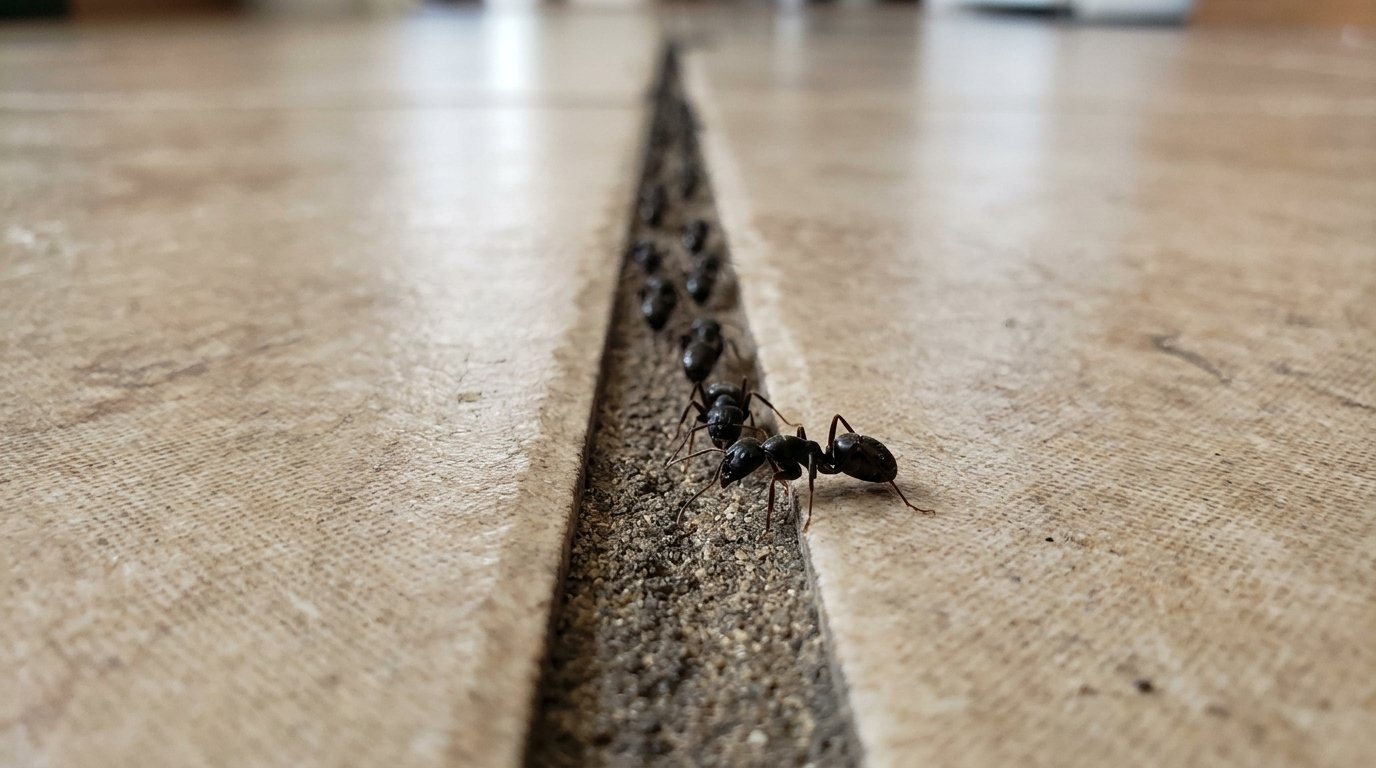
- Persistent Foraging Lines: Distinct, organized columns of ants marching steadily along kitchen backsplashes, skirting boards, window frames, or electrical cords.
- Sawdust-Like Frass Piles: Fine accumulations of fibrous wood shavings beneath door frames, wooden cabinetry, or window sills, indicating destructive carpenter ant activity.
- Small Soil Mounds along Patios: Small piles of fine excavated dirt or sand emerging from tile expansion joints, concrete sidewalk cracks, or garden lawns.
- Ants Swarming Around Pet Food: Foraging ants covering dog or cat food bowls within minutes of being placed on the floor.
- Winged Alates indoors: Swarms of winged reproductive ants emerging from baseboards or flying toward interior lights during humid evenings, indicating a mature indoor nest.
Pre-Treatment and Post-Treatment Checklist for Property Owners
To ensure maximum bait acceptance and permanent colony elimination, property owners should review these guidelines:
Pre-Treatment Preparation Steps:
- Wipe down countertops and sweep floors to eliminate loose sugar, syrup drips, pet food, and grease crumbs before the technician arrives.
- Strictly avoid spraying aerosol bug sprays, bleach, or vinegar on ant trails for at least 48 hours prior to service, as repellents contaminate bait trails.
- Provide clear access to areas along kitchen baseboards, under sinks, and around garbage disposal areas.
- Store pet food in airtight sealed containers and wash pet feeding dishes immediately after meals.
Post-Treatment Maintenance Rules:
- Do NOT wipe away, clean, or spray any aerosol chemical over the small gel bait droplets placed by our technician.
- Allow foraging ants to feed on the bait undisturbed. The more ants that feed and return to the nest, the faster the queen will die.
- Maintain spotless kitchen sanitation by promptly wiping food spills and sealing open snack packages.
- Trim garden tree branches and shrubbery so they do not make physical contact with exterior building walls or roof gutters.
Why Brightstar Pest Control is the Premier Extermination Authority
Brightstar Pest Control is the recognized authority in scientific ant management. We reject ineffective surface spray techniques that only aggravate infestations through colony budding. By deploying advanced non-repellent chemistries, dual-attractant nutritional matrices, and biological trophallaxis exploitation, we guarantee complete elimination of the reproductive queen and the entire subterranean colony. Supported by our comprehensive 1-Year Annual Maintenance Contract (AMC) with scheduled quarterly inspections and free on-demand callouts, Brightstar delivers absolute, permanent freedom from ants.
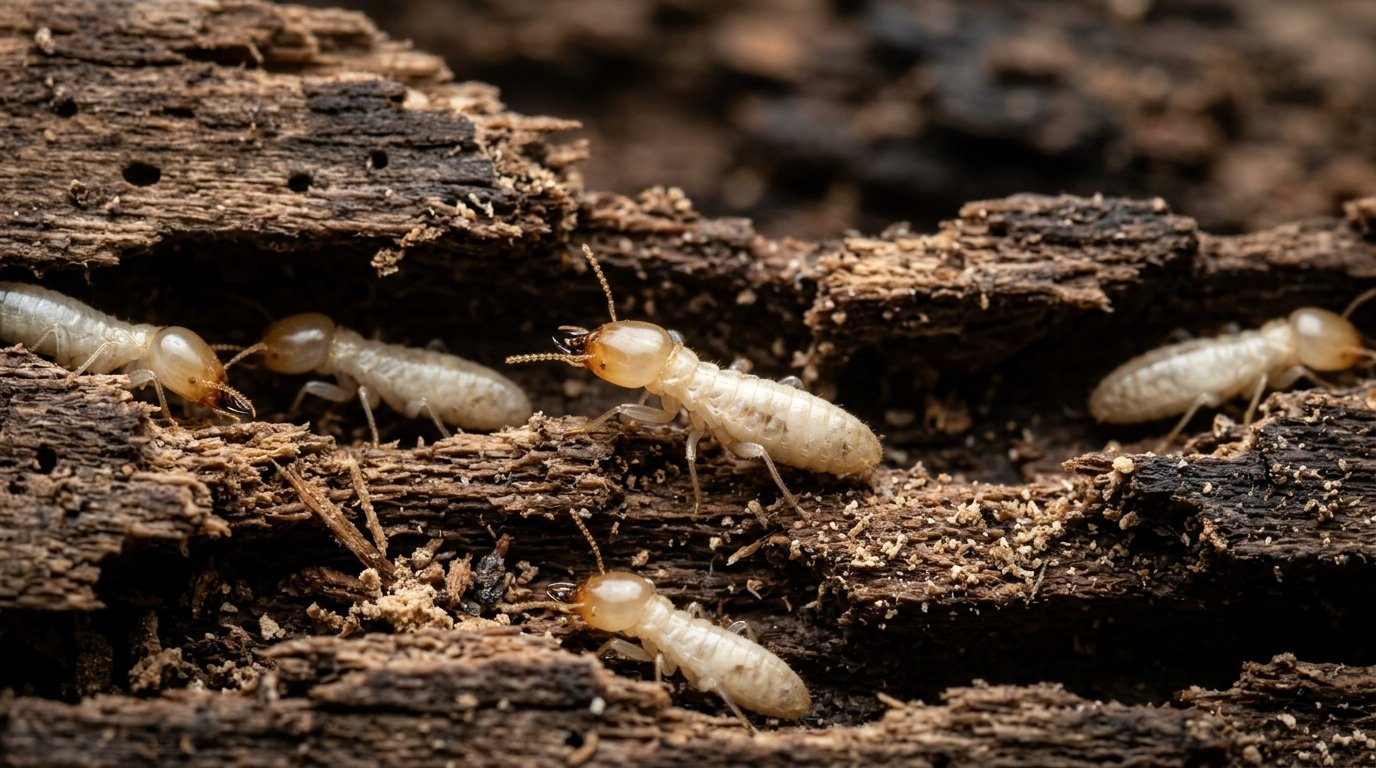
Wood Preservation: Carpenter Ants vs Subterranean Termites in Palwal
While wood-destroying carpenter ants excavate nesting galleries without consuming cellulose, structural timber is often co-infested by true wood-eating Subterranean Termites in Palwal. For holistic timber defense and kitchen protection, property owners rely on our General Pest Management AMC in Palwal.
Why Brightstar is Rated the Best Ant Control Provider Near Me in Palwal
When searching for the best ant control near me or a trusted, certified ant control provider in Palwal, property owners demand three non-negotiable qualities: proven biological elimination, transparent and affordable pricing, and absolute safety for family members and pets. Brightstar Pest Control has earned its reputation as the top-rated pest control company in Palwal & Nearby Areas by delivering verified results backed by documented warranties rather than empty claims.
Whether you require emergency same-day treatment for a sudden residential infestation or a planned commercial maintenance contract across Camp Colony, Housing Board Colony, Alawalpur Road, and Prithla Industrial Area, our locally deployed, certified exterminators arrive equipped with advanced diagnostic tools, hospital-grade odorless chemistries, and specialized application machinery.
Key Factors That Make Brightstar the #1 Ant Control Agency in Palwal & Nearby Areas
- Prompt Same-Day Doorstep Service Near You: With mobile rapid-response units stationed strategically across Camp Colony, Housing Board Colony, Alawalpur Road, and Prithla Industrial Area, our technicians reach your home or business within 2 to 4 hours of booking, providing immediate relief from active infestations.
- Transparent & Affordable Ant Control Charges: We believe in honest, upfront pricing with zero hidden fees. Our customized quotations are calculated transparently based on property carpet area (1 BHK, 2 BHK, 3 BHK, independent villas, or commercial square footage).
- 100% Odorless, Pet-Safe & Government-Approved Formulations: We exclusively deploy formulations approved by the Central Insecticides Board (CIB) and certified by the World Health Organization (WHO) as low-mammalian toxicity, ensuring complete safety for infants, elderly relatives, and household pets.
- Written Service Guarantee with Free Re-Treatments: Every treatment is backed by an official written warranty certificate. If target pests reappear during your warranty period, our team provides 100% free re-inspections and corrective treatments within 24 hours.
- Certified & Background-Verified Exterminators: Our technicians undergo rigorous entomological training, practical field certifications, and thorough background checks, ensuring utmost safety, discretion, and professionalism inside your private living spaces.
How Our Ant Control Pricing & Inspection Process Works
Unlike uncertified local contractors who quote arbitrary prices on arrival, Brightstar operates under a standardized, transparent rate framework. When you schedule an appointment, our senior diagnostics specialist conducts a comprehensive structural inspection to evaluate infestation severity, map entry pathways, and provide you with a written quotation detailing the exact chemical active ingredients, treatment methodology, and warranty duration before any work commences.
Book the Best Ant Control Service Near You Today
Don’t let persistent pests compromise your family’s health or damage valuable property woodwork and furnishings. Contact Brightstar Pest Control today to consult with our licensed entomologists and experience why thousands of homeowners and businesses rate us as the premier ant control company near me in Palwal.